
Cream cheese is expensive–if you don’t want to use it in a recipe you’re not sure about, I tested 9 different basque cheesecake recipes in one day in search of the best!
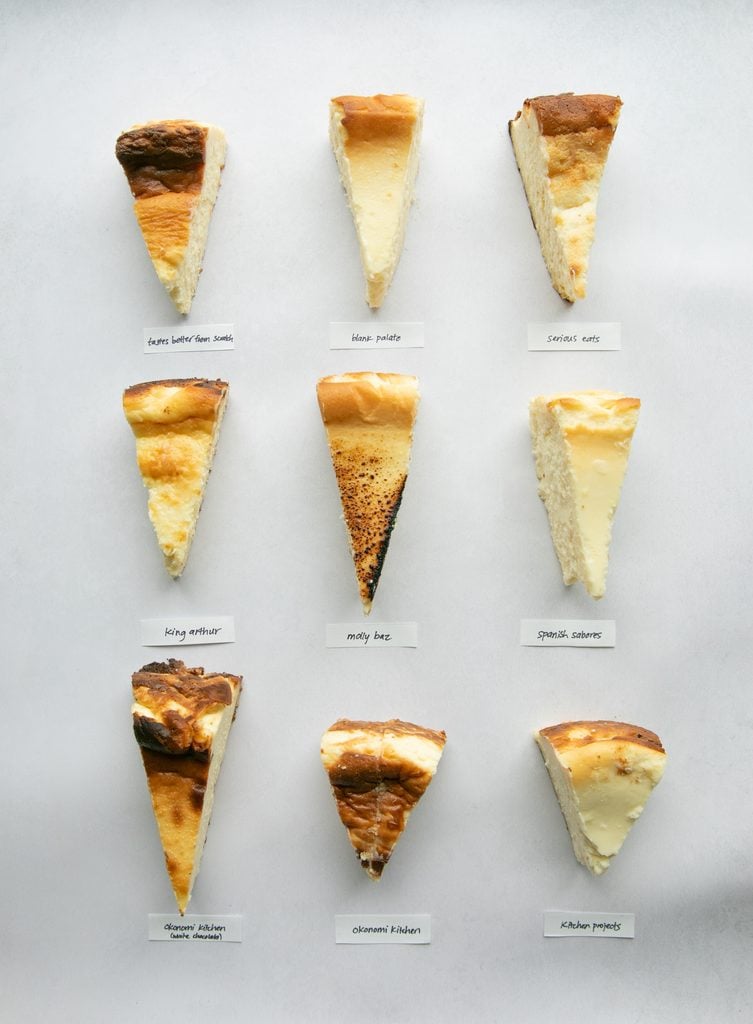
Although I’ve now tackled several cheesecake styles (see New York-style cheesecake and no-bake cheesecake), basque cheesecake is an entirely different beast. With no graham cracker crust and a burnt top, it is stylistically different (and technically generally easier to make) than traditional cheesecake.
And after trying several basque cheesecakes in Madrid (not quite Basque country where basque cheesecake was birthed, but as close as I could get this past summer), I felt ready to embark on a homemade basque cheesecake recipe quest.
The assignment and methodology
My goal was to test 9 different basque cheesecake recipes with unique characteristics and have a pool of tasters rate their favorites in order to find the best. Given the difficulty of slicing 9 whole cheesecakes into neat slices, the pool of tasters was a bit smaller than I wanted, but I still ended up with 32 total tasters.
- I baked all 9 cheesecakes the day before in order to give them time to set overnight before serving. Virtually all recipes called for at least a 4-hour up to overnight rest before serving (even though the iconic birthplace of basque cheesecake, La Viña, reportedly serves the cheesecake the same day).
- My goal for determining doneness was a center temperature of 144℉ degrees.
- All 32 tasters rated samples of all 9 cheesecakes
- Each taster rated each cheesecake on a scale from 0-10 for flavor, texture and overall
- Ingredients were measured by weight according to King Arthur (unless the recipe already specified weight measurements)
Quick results summary
🏆 Top-rated recipe: King Arthur
🙋🏻♀️ Erika’s picks: King Arthur, Tastes Better From Scratch
- For the lightest and creamiest texture: Spanish Sabores, Okonomi Kitchen or Blank Palate
- Slightly denser and creamy texture: Molly Baz, Serious Eats
- Tangiest flavor: Kitchen Projects
- Closest to the original La Viña recipe: Spanish Sabores
You can see the full rankings in the chart below and a longer discussion + link to the recipes in the Analysis section.
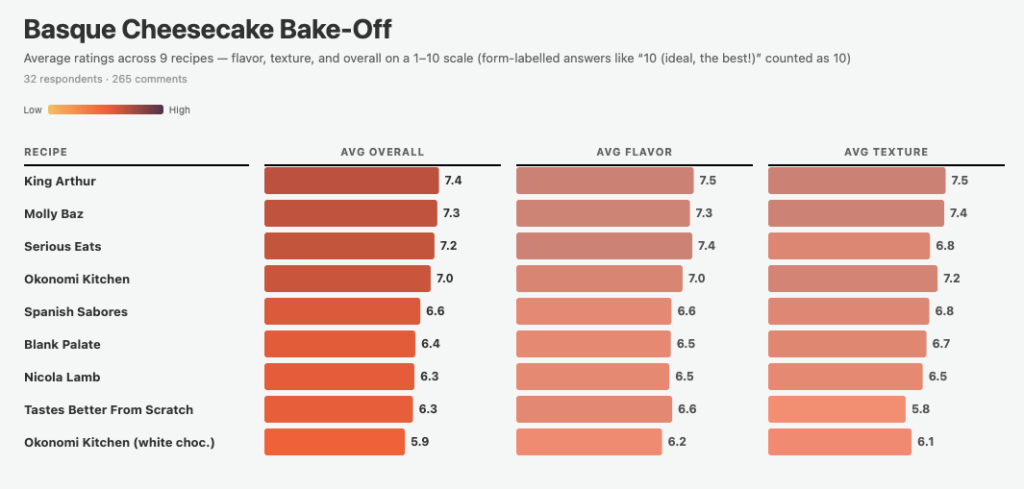
According to my pool of tasters, the top-rated cheesecake of this bake off is King Arthur with an average overall rating of 7.4*. However, Molly Baz’s very popular recipe on Bon Appetit came in a very close second place at 7.3 and Serious Eats followed with a 7.2 rating. (Note that Blank Palate is the same recipe published on New York Times.)
King Arthur was one of my personal stand outs from the bake off, as was Tastes Better from Scratch (one of two recipes that used mascarpone as you can see in the recipe composition chart below). But I would be delighted to be served pretty much any of these recipes!
As always, I don’t claim to have baked each of these recipes perfectly (there are two recipes that for sure went a little awry) but I think we got the general sense at least flavor-wise of each recipe. I encourage you to read through the entire post to see which recipe might be right for you–your perfect recipe might not always be the crowd favorite!
*The average flavor and and texture scores of some recipes are sometimes slightly higher than the overall scores due to rounding errors.
Recipe composition of all 9 recipes
This recipe composition chart might be helpful if you’re curious about which recipes use a certain proportion of cream cheese, sugar, eggs, etc. I reference the recipe composition a number of times in the Analysis section!
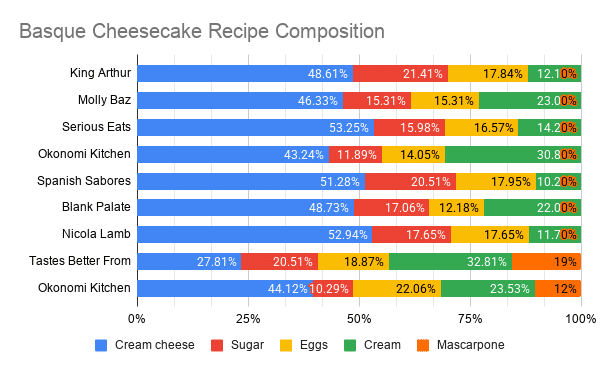
My original theory was that cheesecakes with a higher ratio of heavy cream would be rated more highly (and recipes with a higher ratio of eggs would be rated lower). However, neither theory proved exactly correct.
Notably, the two recipes using mascarpone ended up at the bottom of the chart, which was likely due to my baker error rather than the recipes themselves. Apologies to these recipe developers! And a note for any amateur cheesecake bakers that mascarpone is generally harder to work with compared to cream cheese because the latter contains stabilizers that helps it hold its shape once baked. Meanwhile, higher-fat mascarpone is more susceptible to curdling if overbeaten to breaking under extreme temperature changes or if baked for too long.
Background on the original basque cheesecake
Basque cheesecake was born in the Basque region at a restaurant called La Viña in San Sebastián. If you google “La Viña basque cheesecake recipe,” it’s suprisingly hard to find the original recipe (which has reportedly been released to the public by its inventor, chef Santiago Rivera).
According to Marti Buckley of Blank Palate who interviewed Chef Rivera, basque cheesecake is made from just five ingredients: “cream cheese, sugar, eggs, heavy cream, and a small amount of flour.” You’ll notice that sour cream, vanilla, lemon, etc are not on this list.
You can read a great interview with Chef Rivera here. While he doesn’t believe the top of a basque cheesecake should be too dark (aka burnt), he does say that people can do whatever they want.
Analysis of the best basque cheesecake recipes
For an in-depth description each recipe I tried (along with a link to the original recipe), this section will cover all 9 recipes!
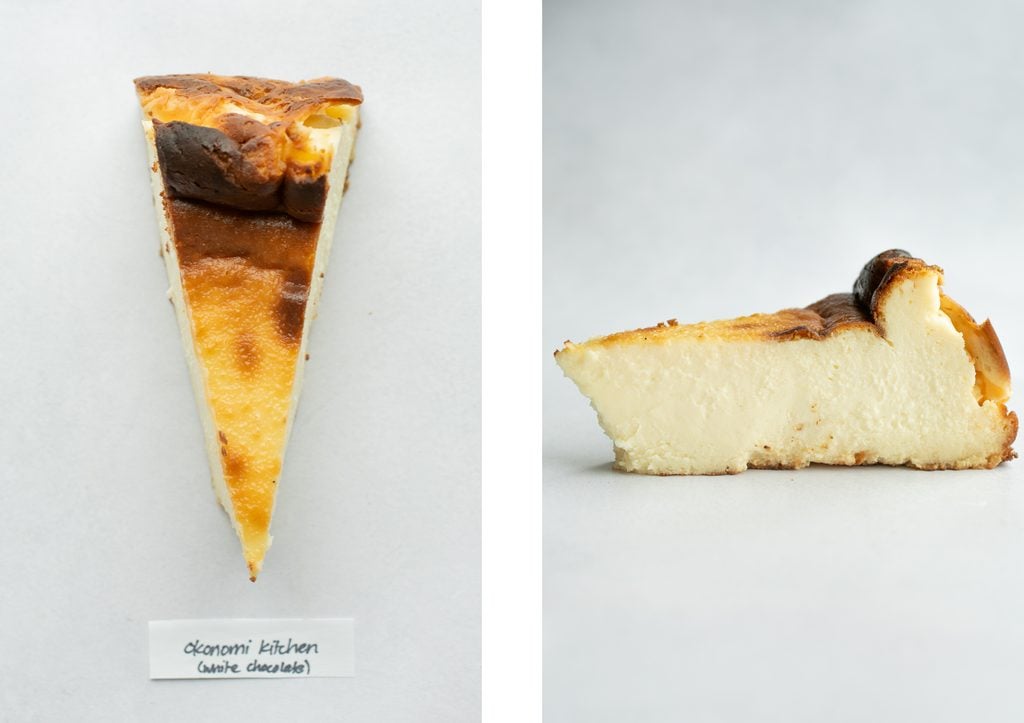
Okonomi Kitchen (white chocolate): a less sweet, dense and creamy cheesecake with a slightly bland flavor
It’s rare to include two recipes from the same developer in one bake off, but I felt compelled to test Okonomi Kitchen’s classic recipe against this adapted recipe with white chocolate. She’s clearly an experienced basque cheesecake maker and her adapted recipe is quite unique. It features a combination of cream cheese, mascarpone (for a creamy flavor and luxe texture) and sour cream (for tang) plus just a touch of white chocolate, which she says adds “extra richness and enhances the melt-in-your-mouth texture.”
Unfortunately, I overbaked this cheesecake slightly–an inserted tester in the center came out closer to 150℉ than 144℉, so take this review with a grain of salt, particularly with regards to the texture. As baked, this had quite a dense texture that almost felt gelatinous on the tongue with a slight chalkiness to the aftertaste. Given the relatively high ratio of eggs (19.7% vs. the average of 16.3%), it does make sense that cheesecake would be extra sensitive to overbaking. If her other recipe (which I feel confident I baked properly) is any indication, the texture should have been significantly creamier.
Focusing on the flavor, I actually didn’t find that the additional ingredients led to a superior flavor. While I liked the contrast of the darker, caramelized top, I actually felt that cheesecake was a bit bland. This did have the lowest overall ratio of sugar (9% vs. an average of 16%) so I wonder if I was just picking up on the relative lack of sweetness. Overall, I know I didn’t do this recipe justice (sorry Lisa!!), but if you’re looking for a great basque cheesecake, my takeaway is that you don’t need to supplement with these additional ingredients to make a great one.
Taster comments:
- Visually, a perfect slice of what one expects Basque cheesecake to look like. Not too sweet. Smooth texture.
- This to me is a quintessential basque cheesecake! The top, edge, and bottom even are deeply caramelised, offering substantial depth of flavour that verges on being bitter. The texture is very consistent throughout, dense yet smooth and somewhat creamy. It is less tangy compared to some of the others without being bland, offering a rich dairy flavour with balanced sweetness.
- This one was one of the darkest samples and that definitely showed up in the smell. Rather than smelling creamy or tangy, the most prominent aroma was the caramelization. This carried through to the flavor as well with a strong caramelized flavor throughout. I could see being controversial, as some of the really dark bits can be slightly acrid and bitter, but as someone who likes heavy browning on their food, I really enjoyed this one. Texture was also nice and smooth despite being so browned.
- I did not like this one very much and I think it was heavily due to the texture but I feel the flavor was lacking as well. This texture was very grainy to me or it tasted as if the ingredients did not mix well enough together to create a creamy, smooth texture. Additionally, I feel like the flavor on this sample was off. Maybe it was partly due to the texture as well, but it tasted bland—like I don’t seem to get any cheesy or vanilla notes from this one like I do for the others.
- Lovely look, was excited about the burnt top and bottom, but that’s where the flavor began and ended. It feels very bland and the texture almost reminds me of a cheese.
- Very grainy texture that was off putting to me. Flavor was okay (fairly mild) but I couldn’t get past the texture
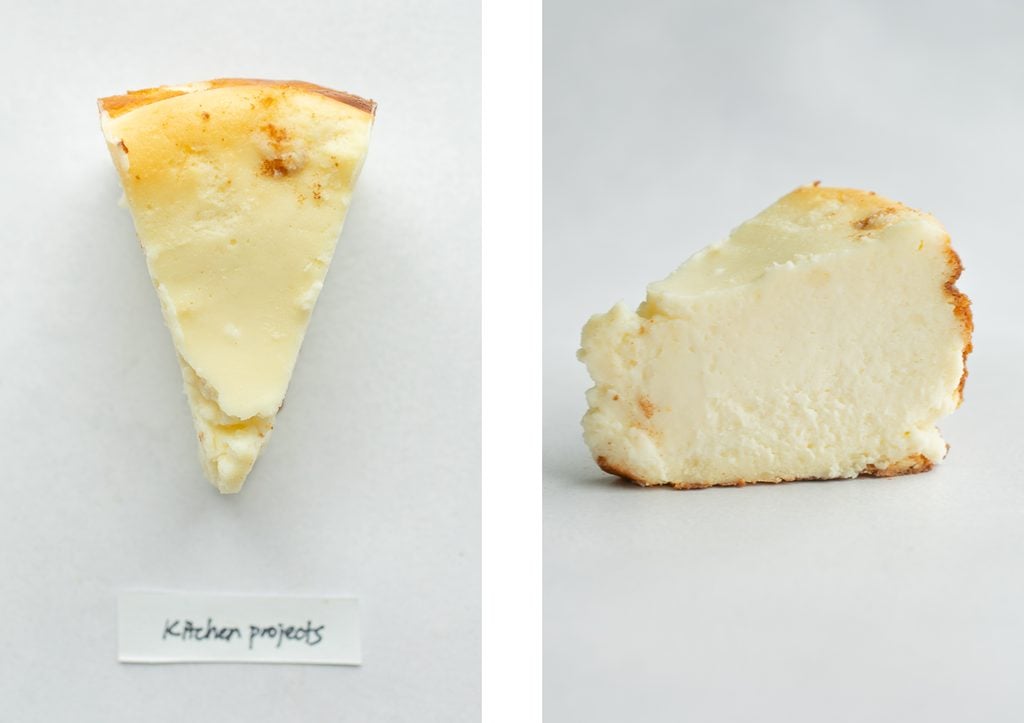
Kitchen Projects: a creamy, well-salted cheesecake with a tang that feels like a New York-style cheesecake
As always, I appreciated Nicola’s very detailed post on how to achieve success with this recipe. I opted for her 6″ cheesecake option for two reasons: smaller slices were easier to fit in the taster box and logistically, the pans made more sense for my schedule. Unfortunately, the shorter bake time (20 minutes) didn’t lend either of my cheesecakes a brown top in my oven (which I think takes awhile to build up heat in the top of the oven). But temping the center and pulling it at 144℉ did lead to a worryingly wobbly center that later cooled into a very creamy, structurally unsound tip (the ideal basque texture I was looking for!).
After chilling overnight in the fridge, I was actually shocked at how well the cheesecake set, though it was still extremely creamy when it came to room temperature. This had a definitive tang that’s reminiscent of a New York-style cheesecake that was extra prominent in contrast to the others. Many tasters picked up on cheesy/sour/savory notes here that weren’t preferred–I’m guessing the savory notes could be attributed to the relatively generous amount of salt. Meanwhile, the 1:1 ratio of sour cream to cream in this recipe explains the tangy comments. This had one of the lowest ratios of cream (11.8%), which could also explain the relatively dense texture compared to others.
This would be a great recipe to try if you prefer more tang, love the flavor of a New York-style cheesecake, and are looking for a well-salted, creamy cheesecake with very clear diretions.
Taster comments:
- Loved this one!!! Perfect balance of cheese and cake. Super soft. Wish it had more color on top, but I liked the smooth texture throughout. This was the most savory which I liked.
- After eating eight other cheesecakes, I was worried that the flavors and textures were going to start blending together, but 9 was really unique. It was by far the most tangy and leaned borderline savory. Flavor wise, It felt the closest to eating cream cheese. It was very dense. Because it was so savory, my conspiracy theory was maybe there was some cottage cheese included to try and increase the protein content.
- A uniquely tangy cheesecake with an almost salty impression on the palette. The aroma/flavour is reminiscent of Greek yogurt. Fairly dense exterior paired with a somewhat creamier interior. The least sweet of the group, bordering on savoury, and lacking caramelisation. This one lacks the sweetness and richness I crave from a classic cheesecake, but perhaps could be delicious dressed up with prosciutto as a savoury option?!
- Really nice balance of flavor and texture. More firm like a traditional cheesecake
- Very cheesy flavor and texture. Almost doesn’t feel like it’s baked, it’s just like smooth cheese. Leans a little too salty and tangy, may be balanced with more sweetness.
- I didn’t like this one much mainly because I feel like the texture was similar to a basic cheesecake in that it was on the dense side and less creamy or light or fluffy. Additionally, I ranked the flavor low because this one had a more sour/tart flavor that I was not a fan of. That sour flavor combined with the taste also being on more of the cheesy side than vanilla or other notes also made me rank the flavor low.
- Too cream cheese forward. Very thick with a very cheesy tang. It did not have a pleasant mouth-feel, almost coating the tongue. “Like eating a block of cream cheese”
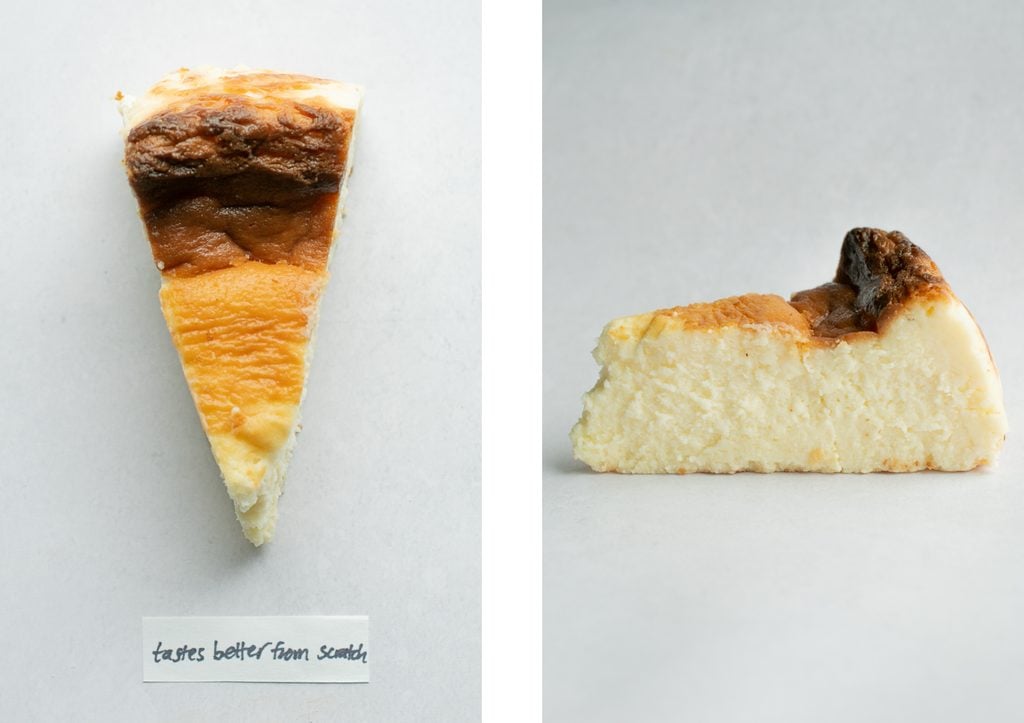
Tastes Better From Scratch: a sweet, balanced mascarpone-studded cheesecake
Tastes Better From Scratch is one of two untraditional recipes that used mascarpone (Okonomi Kitchen’s white chocolate recipe was the other). It calls for 2 egg yolks in addition to 4 whole eggs and one of the highest ratios of cream at 28%. After baking this cheesecake, it weeped a decent amount of liquid, which indicates that I either overmixed or overbaked this cheesecake (though I pulled it just over my target temperature at 145 degrees, which took closer to 50 minutes).
I think this and Okonomi Kitchen’s white chocolate recipes were the only two recipes where I had significant baking issues, and it’s worth noting that both of these recipes used mascarpone (which doesn’t contain stabilizers like cream cheese). Apologies to both of these recipe developers, but I think it’s still worth discussing these results since the finished product was still highly edible.
Looking at the original photos, you can tell this cheesecake is meant to meltingly creamy in the center which is unfortunately a texture I did not achieve. This cheesecake did have a texture that leaned slightly grainier (and a little dense and chalky when cold) rather than pure creaminess, though it was satisfyingly creamy at room temperature. The slight graininess reminds me of eating a slice of New York cheesecake rather than pure whipped cream cheese (ahem, Spanish Sabores)–and I actually preferred it! A few tasters compared this to a ricotta cheesecake. Even without the meltingly creamy texture this cheesecake is meant to have, I think the balanced sweetness, slight tang and satisfying caramelized flavor around the edges translated well. Even slightly overmixed or overbaked, this was one of my personal favorites.
Taster comments:
- A fairly thick, more dense texture almost like a NY style cheesecake, slightly tangy, sturdy, and overall a solid bite.
- Very rich, creamy, dairy forward aroma. It’s not gritty, but there is a coarser texture to it. The coarseness reminds me of something whipped, but that’s kind of at odds with its density. It has a rich dairy flavor in the center. But it’s a little eggy and sulfurous closer to the edges.
- The texture on this one feels grainy kind of like ricotta and I’m not mad about it. I like how it’s slightly tangy and the caramelization on the top adds really nice flavor. Also it’s a sturdy cake and keeps together nicely
- Wasnt smooth which I didnt love, missing carmelized top. Wasn’t rich enough. Reminded me of ricotta cheese Italian style cheesecake.
- I loved the milky vanilla flavor but the cakes texture felt a little separated and grainy
- Good dense texture (kind of like a pound cake). Doesn’t have a super strong flavor, but I was okay with it being mild
- Spongier vs creamy. After tasting the others, it feels the spongiest of the bunch
- Flavor wasn’t as potent but the texture was creamy which I liked. A little too thick after tasting the others
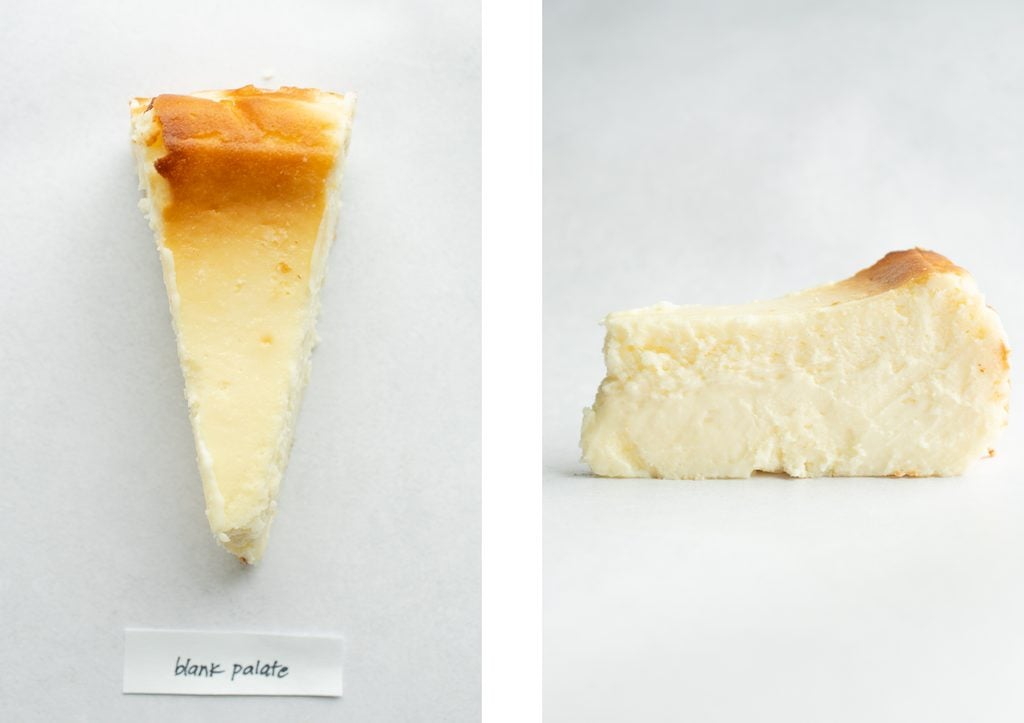
Blank Palate: an extremely creamy, smooth and light cheesecake with a pure cheese flavor
Blank Palate is adapted from the original La Viña recipe, but with less sugar and more cream compared to the adapted version at Spanish Sabores. It’s the same as the New York Times recipe and quite similar to Molly Baz’ recipe on Bon Appetit but with slightly more cream cheese, a touch more sugar, one less egg, slightly less flour, slightly less salt and no vanilla. They were so close, I almost considered omitting this one because I thought they might taste too similar.
In the end, I’m glad I didn’t! The contrast of these two cheesecakes is a great study in how slight changes in ratios and seemingly small ingredient tweaks make a big difference. This felt like the epitome of a super creamy basque cheesecake texture–I found it almost too smooth and creamy. It literally melts in your mouth and tastes almost raw, with more of a cheese-forward flavor that was still somehow a bit bland to some.
Tasted in contrast to Molly Baz, Molly’s has more structure and leans a hair cakier while BP is just straight up creamy and almost has that same foamy, whipped lightness as Spanish Sabores. I think this is actually lighter than Spanish Sabores since SS has a slight bit of grainy starchiness whereas BP has a purely creamy texture. I thought this cheesecake had a good balance of tang, dairy and sweetness, but some found this flavor really bland compared to others (a feedback note I still couldn’t relate to even after tasting this cheesecake again and again).
For an authentic basque cheesecake, this is a great pick!
Taster comments:
- I’d be happy if I got this in a restaurant. A little dry, but the flavor is almost perfect. Would love an iota more sweetness.
- Slight tang, very classic and well rounded flavor, nice golden color.
- A nice airy texture but the flavor goes in a direction I don’t want it to go, almost like it’s raw, and has no taste of the caramelization. Doesn’t have the classic basque look to it.
- It’s quite cheesy. Not as sweet as I’d expect. A bit sticky in the mouth.
- Soft, almost whipped texture with a decently smooth mouthfeel. The flavour profile is mild and somewhat bland, sweet, yet with little tang or depth. To me, this tastes like the kind of cheesecake made with minimal ingredients.
- Creamier consistency but so so bland
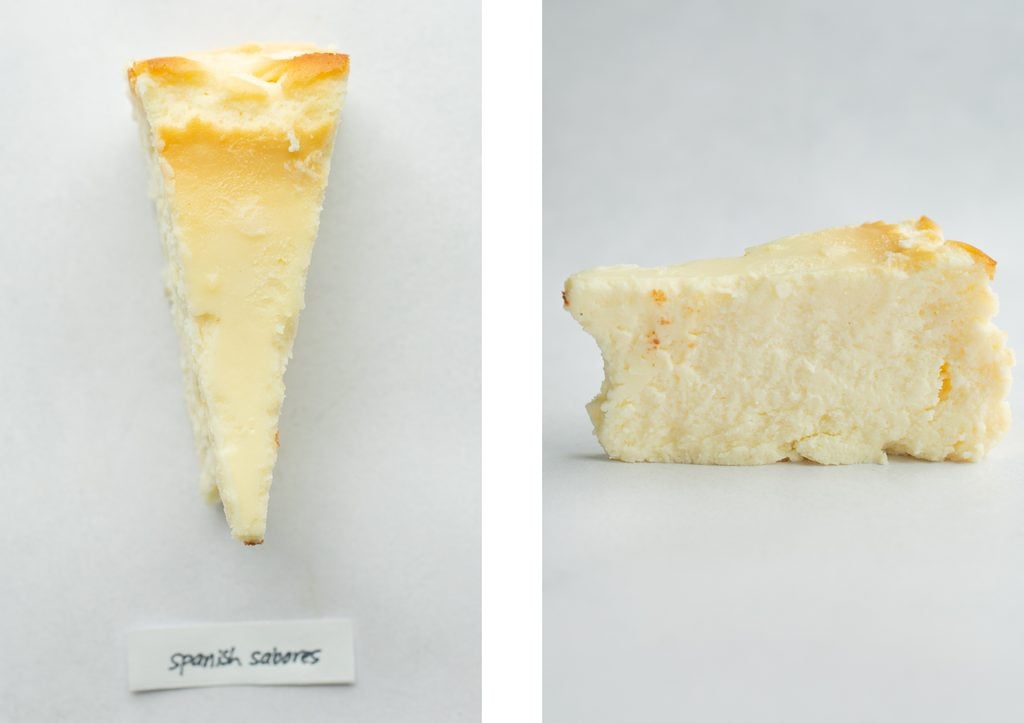
Spanish Sabores: the ultimate light and fluffy and creamy-soft cheesecake that feels like a cloud of whipped cream cheese
As mentioned above, Spanish Sabores also bills itself as a version of the original La Viña cheesecake–but in contrast to Blank Palate, it uses a bit more sugar and eggs with significantly less cream. The average cream content across all recipes was 19.2% but Spanish Sabores uses just 10.3%! No vanilla or salt to be found in this recipe, just the original five ingredients.
With the low ratio of cream, it makes sense that the flavor of this one felt very cheese-forward (especially with no vanilla or salt to enhance the pure cream cheese). I was impressed that even after a full night of chilling, this cheesecake remained so extraordinarily light, fluffy and creamy soft–almost foam-like in texture. There’s absolutely NO grittiness or curd-like texture to this cheesecake which is probably technically great (however, I and a few other tasters found it too creamy for our tastes). Many wished for more browning on this cheesecake, which was probably just an issue with my oven. Tasted in contrast to Molly Baz, I found that the textures were actually quite similar–Molly Baz just has a stronger flavor that lingers on the tongue in a way that others didn’t.
Overall, this felt like another great example of what an authentic basque cheesecake should be like. According to our one recipe tester who has been to La Viña, this was the closest to the original La Viña cheesecake (though the top wasn’t as browned). This is the obvious pick if you want a super creamy and light cheesecake! Just know that baking this properly means the center will look extremely loose and wobbly when done–make sure to temp it for doneness for the best results.
Taster comments:
- This is my ideal texture for a basque cheesecake. Soft and creamy. Flavor is on the lighter side but you can taste the cream cheese well
- Texture is perfect. Completely smooth. Closest to La Viña, the original basque cheesecake in San Sebastian. However La Viña is served warm so hard to compare directly. Flavor isn’t dynamic and carmelized though.
- Feels like the perfect balance of light, creamy, and custardy. I think it makes the mouthfeel really nice and consistent when you eat it. I like the flavor on this one as well because it’s not overpowering with the cheesiness notes. But overall, the texture was better than the flavor for this one I think, a little too cheesy for me
- Very creamy and smooth. It definitely felt like it had a looser texture than many of the other samples. The flavor was well balanced, if a little bit sweet. There was no egg flavor to this one, even on the edges where things tend to get more cooked. My main issue is that it doesn’t necessarily read basque cheesecake since it’s so lightly browned.
- Creamy, creamy, creamy. Looks wet and tastes it. The flavor is ok, but it lacks the caramelization and sturdiness to hold its ground.
- I didn’t love how it looked wet before I even tasted. It feels like it has a raw flavor and yogurt-like texture–it’s very creamy and sticks to the fork more than others. Also not as caramelized as I would like.
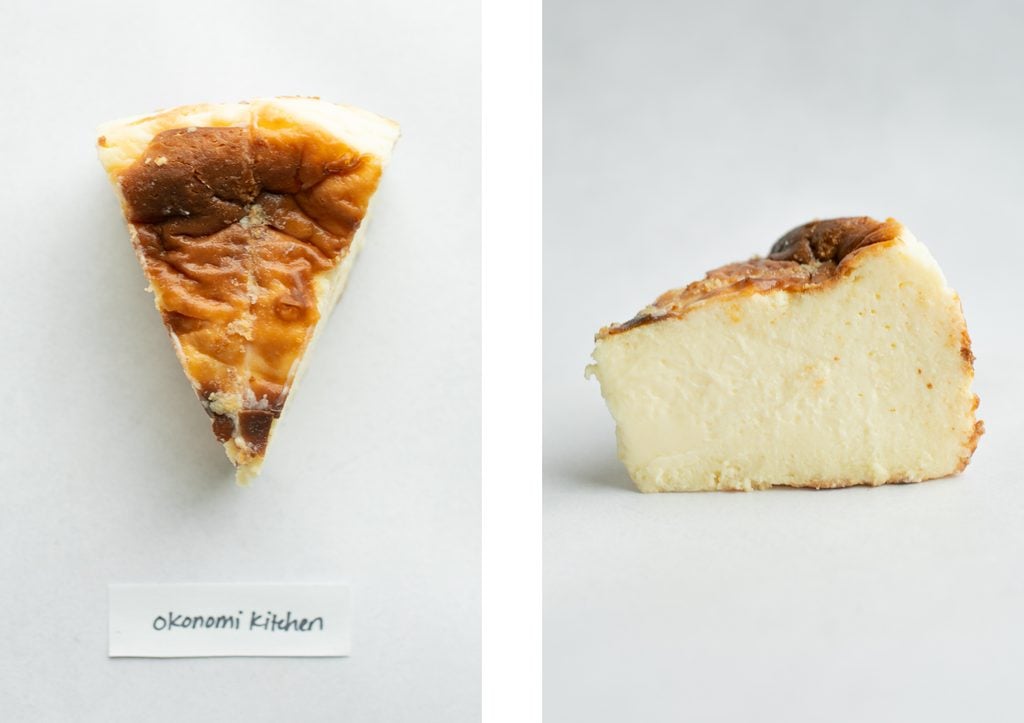
Okonomi Kitchen: an extremely soft and smooth custardy cheesecake with a rich dairy flavor
Lisa’s regular basque cheesecake recipe stood out to me for its high ratio of cream (30.8% vs the average of 19.2%) and use of egg yolks. She notes that she omits flour/cornstarch for a smoother mouthfeel and omits vanilla because it’s unnecessary. I looked for a recipe with similar ratios, but hers was fairly unique with a lower-than-average ratio of cream cheese (43%), sugar (11.9%) and eggs (14%). My theory was that this higher ratio of cream would perform relatively well.
And indeed, this cheesecake had an EXTREMELY smooth, soft and creamy mouthfeel–second only to Spanish Sabores in my opinion (a close tie with Molly Baz and Blank Palate). Eaten next to a recipe like Kitchen Projects, for example, this cheesecake is significantly lighter in texture, though still with a denser creaminess than Spanish Sabores. Once again, I think that this texture is probably technically excellent, but it was a bit too creamy for me personally.
This had a slightly tangy, pure flavor that one taster described as a “rich dairy flavor.” Personally, I think I’d enjoy this with a pinch of salt and vanilla (sorry for the blasphemy). This is an easy pick if you want a custardy-soft, very creamy cheesecake with a rich, pure dairy flavor. In contrast to the enormous cheesecake that Spanish Sabores yields, this is a petite 6″ cheesecake, perfect for a smaller portion.
Taster comments:
- This is the texture I want for a basque cheesecake. Super creamy and almost like a custard. Really nice light cheesy flavor with the perfect amount of sweet
- I liked this one a lot. I think the texture was a perfect mix of light but also creamy, smooth, and custardy. I also think you get more of the custardy texture towards the middle on the cheesecake and then more of the creamy smooth texture towards the edge. I’m getting a hint of something like caramel maybe on the bottom.
- Very dairy forward in both flavor and texture. Rather than being tangy from the cream cheese, I found it to have much more of a rich dairy flavor. It was really dense and smooth, kind of like ice cream with a low level of aeration. While other samples were dense, this one had more of a creamy custardy density rather than a firm, cakey, density. I wish there was more caramelization on it because the parts that were caramelized were really great. I liked it, but I don’t think I could eat more than a tiny sliver of it because it’s so dense and heavy.
- Dense, rich, pleasantly tangy, and sweet with mild caramelization notes. The edge is denser than the center without being crumbly or grainy. Delicious in small quantities, but likely too rich to eat a larger slice.
- Love the creaminess, but too melty. Slightly cheesy but still mild flavor. Good for one bite.
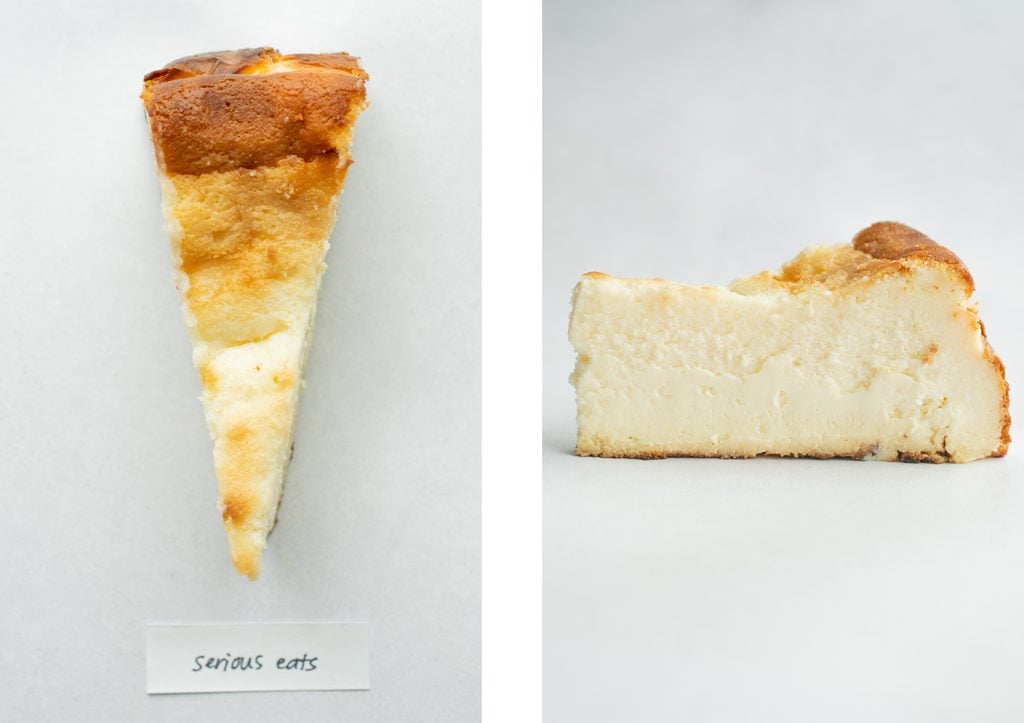
Serious Eats: a well-salted, cheese-forward and creamy cheesecake
Serious Eats stood out for both technique and ingredient composition–it calls for chilling the batter for 30-60 minutes before baking. Note: I did omit the lemon zest for consistency here. This had a slightly lower ratio of cream and higher ratio of cream cheese than average. It also called for two extra egg yolks, vanilla, a full teaspoon of salt and a tablespoon of sugar that gets sprinkled over the top before baking.
While I was skeptical about the sugar on top, I think it did help the top brown (especially in my oven where the top heat feels quite uneven. One taster said this was the best combination of “creamy and cakey” which felt accurate–it was both smooth and soft, yet dense and structured. In contrast to the foamy lightness of Spanish Sabores, this one has more of a substantial heft to it when you slice a fork through. The aftertaste read a bit pasty to me rather than custardy, but most tasters didn’t seem to mind) This had a really cheesy, tangy, salt-forward flavor that I didn’t love, though I did love the caramelization around the edges.
This is a great recipe if you want a sturdier, slightly denser basque cheesecake with a notable tang and salt level. This feels like the big brother (in size and textural similarity) to Kitchen Projects.
Taster comments:
- This is the flavor I want from cheesecake. From first look, this one is beautiful and inviting, and from the moment of first bite, hits you with a gloriously smooth and lovely flavor. This is the happy dance slice and a stand-out winner for me.
- Best combination of creamy and cakey. The right amount of burning on the top to provide a good contrast with the sweetness of the cheesecake. It was perfectly salted. While not as creamy as [Blank Palate] or [Spanish Sabores], still the favorite texture of the lot.
- Feels perfect. It’s tangy yet sweet. The texture is smooth. The caramelized edges on the top and bottom add such a nice flavor. I also appreciate how it’s sturdy and slices neatly. Definitely stands out as my favorite.
- I loved this one. Good tang and contrasting vanilla flavor. The texture was perfect, very smooth and soft under my spoon. Creamy, not grainy throughout. Even on the crust/end piece.
- More of a solid texture like a traditional cheesecake. Overall a well rounded flavor that balances out the sweet and tang of the cream cheese
- A little tang, bitter toasty bits that give it a butterscotch quality, texture is still soft but leans drier and more crumbly in the group.
- I really enjoyed the flavour of this one. The crust, in my opinion, is perfectly browned, offering pleasant caramelisation notes alongside a nicely tangy interior. The sweetness is well balanced. This one’s shortcoming is the texture. It has a dense, somewhat powdery and bordering on grainy texture, lacking the creamy luscious texture I’d want from a cheesecake. This was one of the more divisive slices for me!
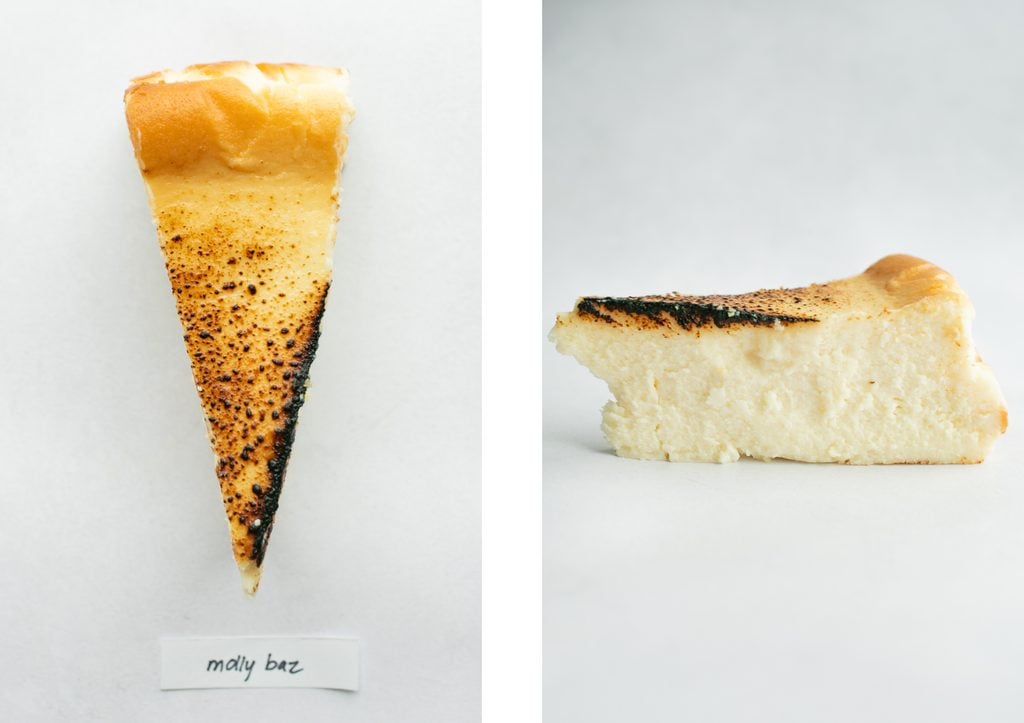
Molly Baz: an incredibly creamy cheesecake with a smooth vanilla-forward flavor
Molly Baz was the most requested recipe on Instagram. As I mentioned above, it’s very similar to Blank Palate’s recipe but has one more egg and slightly less cream cheese and sugar. Though I thought about omitting this recipe in favor of Blank Palate’s recipe, I’m glad I included it.
My oven barely browned this cheesecake (the first one of the day) save for a golden hue around the edges, so I decided to try torching it. I immediately regretted this decision (you can see the uneven pocked char across the top). Though I usually try to stay consistent in technique across all recipes, this was one misstep as I didn’t try torching any of the other recipes.
Overall, I can see why this cheesecake is so popular. Like Spanish Sabores, it’s immensely light and creamy. When I first tasted Blank Palate, I didn’t think it could get any creamier–but tasted in contrast with Molly Baz, Blank Palate actually has a slight bit of graininess and a more sour flavor compared with the extremely smooth vanilla-forward notes from Molly’s cheesecake. The creaminess is light and kind of melts in your mouth with just a little bit of pasty heaviness that lingers on your tongue. However, I think the vanilla (and salt) gave this a significant flavor edge over other similar cheesecakes.
This is a crowd-pleasing cheesecake that I think most would enjoy! Unless you’re looking for a strictly traditional basque cheesecake, in which case I would look for one without vanilla.
Taster comments:
- Really good mix of caramelization, creaminess, and sourness. Flavor is a total 10, good sweetness and cream cheese tang. The texture is really nice and soft and creamy. Maybe a little more firm than traditional basque cheesecakes
- This one surprised me. By look I wasn’t optimistic, but it has such an airy almost fluffy texture that melts in the mouth. It’s a delightful bite dominated by vanilla. Just wish it had a slight more tang to it.
- Pleasant vanilla aroma and lightly tangy, yet decently rich flavour profile. Texture is rich and creamy with a pleasant mouthfeel. The edge is notably denser and a tough crumbly/grainy.
- Texture stands out on this one–it’s smooth and almost fluffy. I can taste the cream cheese but it also has a ricotta taste to me. The top looks interesting, maybe like it’s been torched. I do wish there were more caramelization.
- I think this one is fairly middle of the scale or just above average. I think the slight bitterness from the toasted portion adds to the flavor but I don’t think it was as light or custardy as I expect a basque cheesecake to be.
- Definitely an underrated, simple flavor. I could have used more punch. Unfortunately, this tasted the most store brand. It’s the least memorable so far.
- I found this one kind of bland. It was mostly just sweet and it didn’t feel like there was enough acid. The torching didn’t provide enough caramelization notes. The texture was also too dense for my preferences.
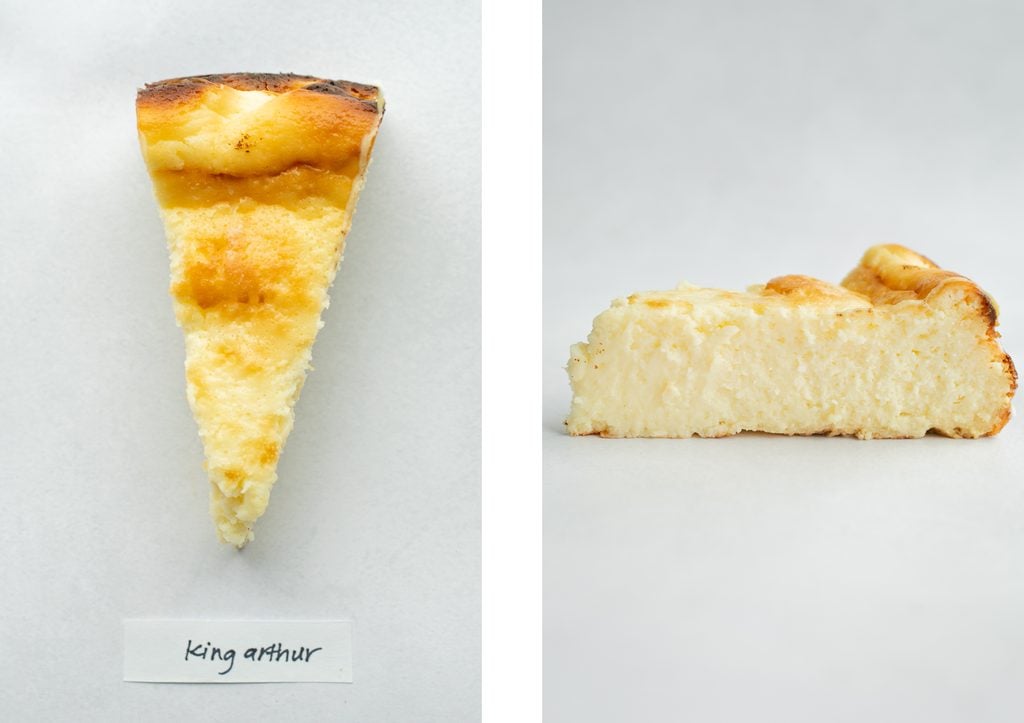
King Arthur: a creamy, fluffy, sweet and well-balanced cheesecake
King Arthur’s recipe stood out for one of the highest ratios of sugar (21.4%) and lowest ratios of cream (12.1%). It was the only recipe that suggested assembly in a food processor. Dump in all the ingredients and process–how easy is that? Interestingly, this recipe suggested taking the temperature 1″ from the edge rather than the center with a target temp of 185 F. With just 1.5 lbs of cream cheese vs. the typical 2 lbs in a 9″ springform pan, this was one of the more petitely sized recipes (aside from the 6″ recipes).
I thought a lower ratio of cream would make for a less creamy cheesecake, but this was still extremely creamy and fluffy that somehow balances a light density without being a creamy cloud like Spanish Sabores. It’s rich, a little eggy (but not overly so) and had a slight grain to the texture which made me wonder if I had overbaked the recipe (next time I would try temping the center rather than the edge).
But you’ll probably be unsurprised to know that I actually really enjoyed this texture, as did other tasters! This is the only recipe besides Okonomi Kitchen’s recipes that doesn’t use flour, which probably helped keep the texture creamy rather than curd-like. It leans sweet, but it feels nicely balanced with a mild cheese/dairy/tangy flavor. One of my favorites!
Taster comments:
- My favorite!! Amazing texture, very creamy and smooth mouthfeel but much more dense than the last one. The burnt top looks interesting but caramel taste is perfect.
- Very tangy upfront. Maybe an addition of Greek yogurt? The flavor was a nice unexpected surprise and balanced out the sweet nice. A soft and creamy texture made this a solid bite
- Favorite flavor so far, seems like the bottom had more of the classic burnt basque taste / caramelized taste
- The flavor is really nice. The flavor feels sweeter. It has nice caramelization on the bottom but missing on the top. The texture is less homogenous, and maybe denser, it’s almost spongy. I still enjoyed it.
- Notably sweet but not cloying with a mild tang and rich dairy flavour. Rich, creamy, and smooth texture that coats the palette, perhaps due to a higher fat content? Touch of pleasant caramelisation from the crust, with a somewhat denser, crumblier texture at the edge. A solid slice overall, but not a standout!
- Definitely tasted the most like cheese. Wait, was this just creamy cheese?
- The texture is a little rougher and dry, almost sponge cake, but the flavor is subtle and nice. A lighter caramelization, and that’s slightly missing in the flavor too. Overall a solid slice but nothing to write home about.
Takeaways on making the best basque cheesecake
Properly softened ingredients is the key to a smooth batter: The best way to set yourself up for success is to use room temperature ingredients (cream cheese, eggs, cream, sour cream, mascarpone, etc). Room temperature ingredients will blend together more smoothly and quickly, reducing the risk of overmixing. If your cream cheese is still a bit cold, there’s no easy way to remove the lumps after you start mixing (straining it through a fine mesh sieve is a last resort). I like to set out my cream cheese around ~4 hours ahead of time (depending on the ambient temperature) to make sure it’s properly tempered before starting.
Mix your batter on low: King Arthur calls for a food processor to prevent overmixing cheesecake batter and incorporating too much air which can cause the cheesecake to puff or crack. If using a stand mixer, using properly tempered ingredients will help you to be able to mix the batter smoothly on low without overmixing, adding too much air, and prevent splitting (especially if you’re using a recipe with mascarpone).
Temp the center for doneness: I found that Nicola Lamb’s tip to test the center with a thermometer for doneness at 144℉ worked reliably well and this is what I will be using for basque cheesecake going forward! Even if your cheesecake looks worryingly wobbly or sloshy in the center at this temperature, it should firm up after chilling overnight in the fridge.
For American palates, salt and vanilla are preferred: Although salt and vanilla aren’t traditional in basque cheesecake, my tasters generally gave an edge to recipes included these popular flavor enhancers. This might not be true for people who grew up with traditional basque cheesecake, but it was true of my American pool of tasters! Adding a teaspoon or so of vanilla is an easy way to boost the flavor of your cheesecake. Meanwhile for salt, 1/2 tsp seems about standard for a 9 or 10″ cheesecake while a full teaspoon of kosher salt takes into well-salted territory.
Sour cream isn’t necessary (unless you like tang): In the case of Nicola Lamb, the tang took the cheesecake to the comparison against a New York-style cheesecake. Generally, tasters seemed to prefer the recipes without sour cream for a more traditional basque cheesecake vibe.
Try sprinkling sugar on top for a bronzed top: Serious Eats’ untraditional tip of sprinkling sugar on top of the cheesecake to promote deep browning is actually very helpful if you’re not sure your oven can achieve a decent amount of top heat. It helps with the caramelization (imagine a vague whisper of a creme brulee cheesecake)
Serve the same day for the loosest texture: La Viña reportedly bakes and serves all of their cheesecakes the same day (while most home recipes call for chilling the cheesecake overnight to set). If you’d like to try to achieve the same uber-creamy texture as La Viña, you can try serving the cheesecake the same day you bake it–just let it set for a few hours at room temperature first, and don’t expect super neat slices!

Leave a Reply